Introduction
While drawing in with a product designing partner for outsourced work, choosing the correct pricing model can be confounding. You need to adjust the risk and prize for the two gatherings while guaranteeing that your outsourcing partner gives solutions, not activities ensuring that you are having the most incentive for your venture. Fortunately – or possibly not, thinking about your perspective – companies have various pricing models to select while organizing their next outsourcing contract. At the point when a client employs a software development organization, they all sign a charging agreement.
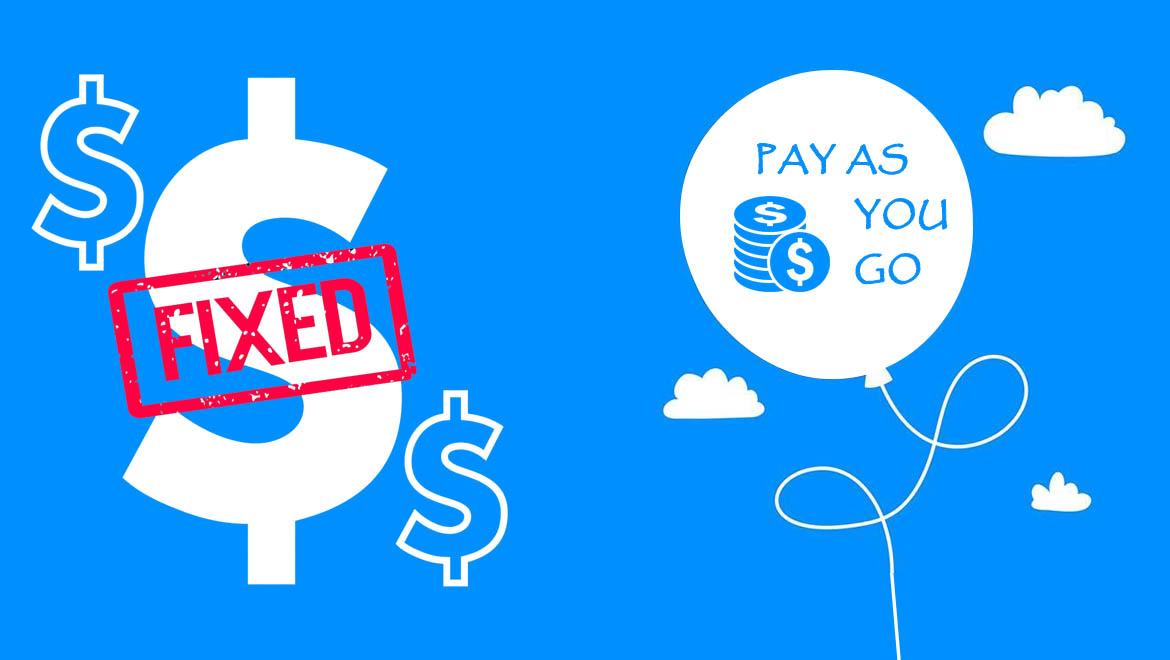
What is the difference between a fixed price and pay as you go, engagement model?
Fixed price model:
The project in the fixed price model demands needs to be composed to characterize this extent of work. Typically in this model client has finalized requirements for the work to be performed by an outsourcing vendor. The vendor will have a good idea about work to be performed and the estimated cost and delivery time. With a fixed-price venture, the service provider and the client both convey some extension-related hazards. Any additional job, as a rule, goes under an extra understanding. In that, the customer must compensate for extra. Right now, essential to talk about everything before the genuine advancement so as to assess the expense of the product item. The fixed-value model guarantees that a job is done and conveyed inside a particular budget and timeframe.

Advantages of Fixed price model
* Project scope is fully defined and understood by both the parties
* The cost for the project is clearly defined. The customer knows what will be done at what price.
* Project timeframe is also clear as to what will be completed when.
* More plainly characterized determinations and demands with numerous pieces of information gives a clear sight of the work.
Disadvantages of Fixed price model
* If the requirements change there will be back and forth
* when the project scope and requirements not fully defined this model will not work
* If you don’t share your needs accurately, at that point the delivered item won’t be the same as hope.
* Any change in the extension would cause an adjustment in the all-out expense and this change would be repaid by the specialist organization’s end.
* The flexibility is not there
Time and materials pricing model:
The time and materials model includes routinely paying for a job finished. Here, the client gets set up with a group and is charged for the real-time spent on improvement. The payment will be done as work is delivered or on an agreed-upon periodic basis.
Advantages of Time and materials pricing model
* This model is of generally safe, that is it has an adaptable budget that is a win-win thing for both companies.
* It offers more adaptability as you can make changes without contemplating the financial limit.
* This model permits you to continue with every cycle until you have a strong MVP rather than arranging everything.
Disadvantages of Time and materials pricing model
* It requires an undeniable association from your side which involves investing a lot of time in conversation with the advancement group.
* If you recommend various changes, at that point there could be a postponement in the date release.
* There is low spending control as the general expense can surpass the normal budget if you demand extra highlights.
Software development specialists can assist you in selecting the best model for your commitment, regardless of whether you’re onshoring, offshoring or nearshoring your software development, contact Systemart to begin!