Software Outsourcing refers to the allotment of the development process of software to a third-party developer by the original company. The company may choose a third-party developer to develop customized software to be used by the company itself or for the customers of the company. This allows the internal tech team of the company to focus on other aspects of the software and its implementation, such as growth and innovation.
Software Development Outsourcing has a range of benefits. First of all, Software outsourcing saves a lot of time and money. According to a survey, 59% of businesses use outsourcing to reduce the development budget. 57% of Software outsourcers claim that Software Development Outsourcing improves the quality of the software.
Outsourcing also allows access to a broader range of talented developers and software engineers experienced in various techniques and methods. This level of expertise and breadth of skills may not be available in a single internal Tech and Development Team of a company. Software Outsourcing also reduces the workload of the Tech Team, as the Bulk of the development process is taken away from their shoulders.
Software Outsourcing Models
Software Outsourcing allows for a very customized development process in which the company can choose how and when to develop, maintain and test the software or parts of it. The Software Outsourcer may use an outsourcing model for this purpose. Some commonly used software development outsourcing models are given below:
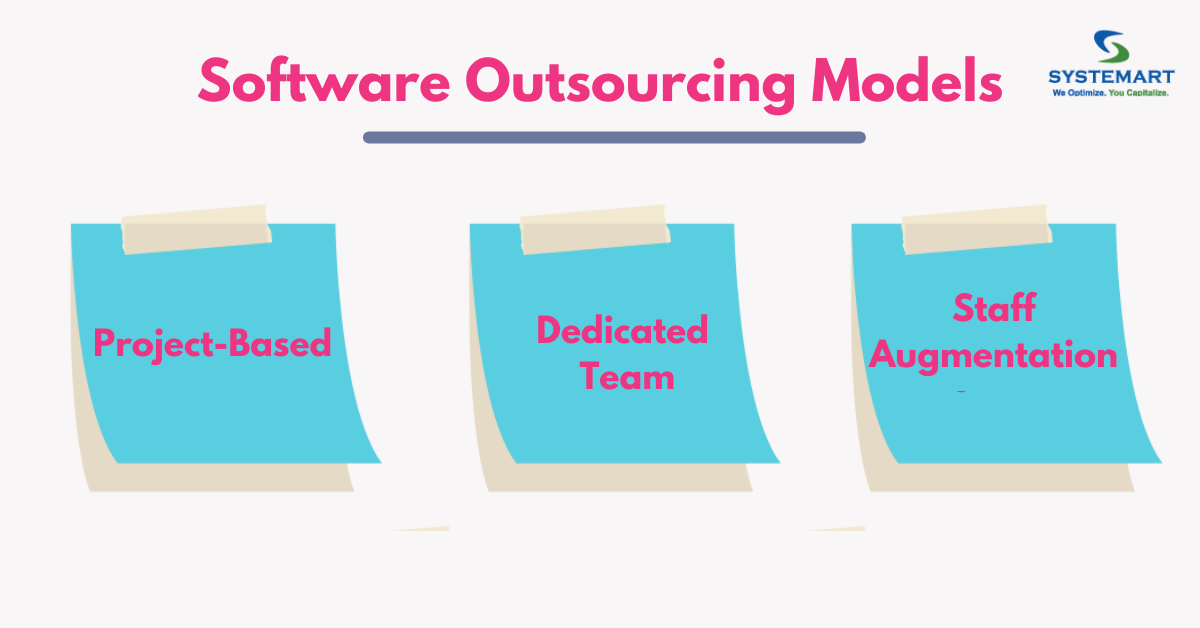
Project-Based:
In this type of Software Outsourcing, the company hires a third-party developer and gives them the requirements, expected time frame, and budget. This model involves end-to-end management outsourcing of the entire software. The company then takes a hands-off approach to the development process, and the third part provides the company with the required software by the deadline. The project’s price does not depend on the number of hours worked; instead, it is set according to the size and difficulty of the software being developed.
Dedicated Team:
In this Software Outsourcing Model, the company hires talented and experienced developers from a third party and adds them to its core tech team as an extension. The employed individuals collaborate with the core team and can be tested for their coding skills before hiring.
Furthermore, the hired developers can all be experts in different aspects of the development process or even in other programming languages. Management of a dedicated team and a remote team are similar, as they both require a project manager whose job is to ensure that the work is done timely and efficiently. They are paid according to the hours they work.
Staff Augmentation:
In this Software Development Outsourcing Model, the company itself manages the core development process, and the third-party vendor builds and assembles the software development team. It’s a more hands-on approach, and the company has to assign responsibilities and tasks to the developers. The third party’s job is to ensure that the developers’ productivity is high and maintained and that any problems they may have are timely addressed.
Things to remember while Outsourcing
Software Outsourcing can be very beneficial and time and cost-reducing if appropriately used. Some things should be kept in mind before and while taking part in Software Development Outsourcing. Following are some of the tips to be remembered:
Selecting a Software Outsourcer:
The quality of the software greatly depends on the Software Outsourcer. A skilled and talented outsourcer will develop sound and fully functional software with minimal chances of errors. On the other hand, an unskilled developer may develop software that may look good during the test runs but may end up crashing due to complications later on.
Simply reading reviews and summaries about the previous projects completed by the Outsourcer may not be enough. It is recommended to take a look at the projects themselves before reaching a final decision. The projects must be first judged according to some standards, like the quality of user experience, the difficulty level of navigating through the software as a user, the overall design and aesthetic of the software, and the loading time.
Performance Monitoring:
The most significant complication in hiring a Software Development Outsourcing team is that it isn’t possible to monitor them and their progress, primarily if they are remotely based. The company cannot monitor how the software is developed, which aspects are completed or not, how much time is taken for the process, and how much they need to be paid (if the budget is set to an hourly rate).
The problem can be solved by simply using Performance monitoring tools. These tools and software allow you to keep track of the progress of the development process and make things a lot easier for the company.
Test Projects:
Before a company hires a third-party outsourcer, it is better to know their skills and experience. One way to do this is to ask the team to work on a test project or a trial run. The team’s performance in the test project can decide whether or not the company should hire them. It can also help familiarize the company with the outsourcers, which can be beneficial, especially if the company intends to work with them long-term.
To conclude, Software Development Outsourcing is an excellent way to reduce time and cost in the development process of software, but some things must be kept in mind and checked before diving into outsourcing. A company should make sure that the Third-party outsourcers they are hiring are skilled and experienced, and capable of working on and finishing the required software in the set time and budget.
Deadlines and Management:
It is best to set realistic deadlines for both the company and the Outsourcer. Additionally, the company should take stock of their available resources and materials and the services their own employees can provide before they delve into software outsourcing.