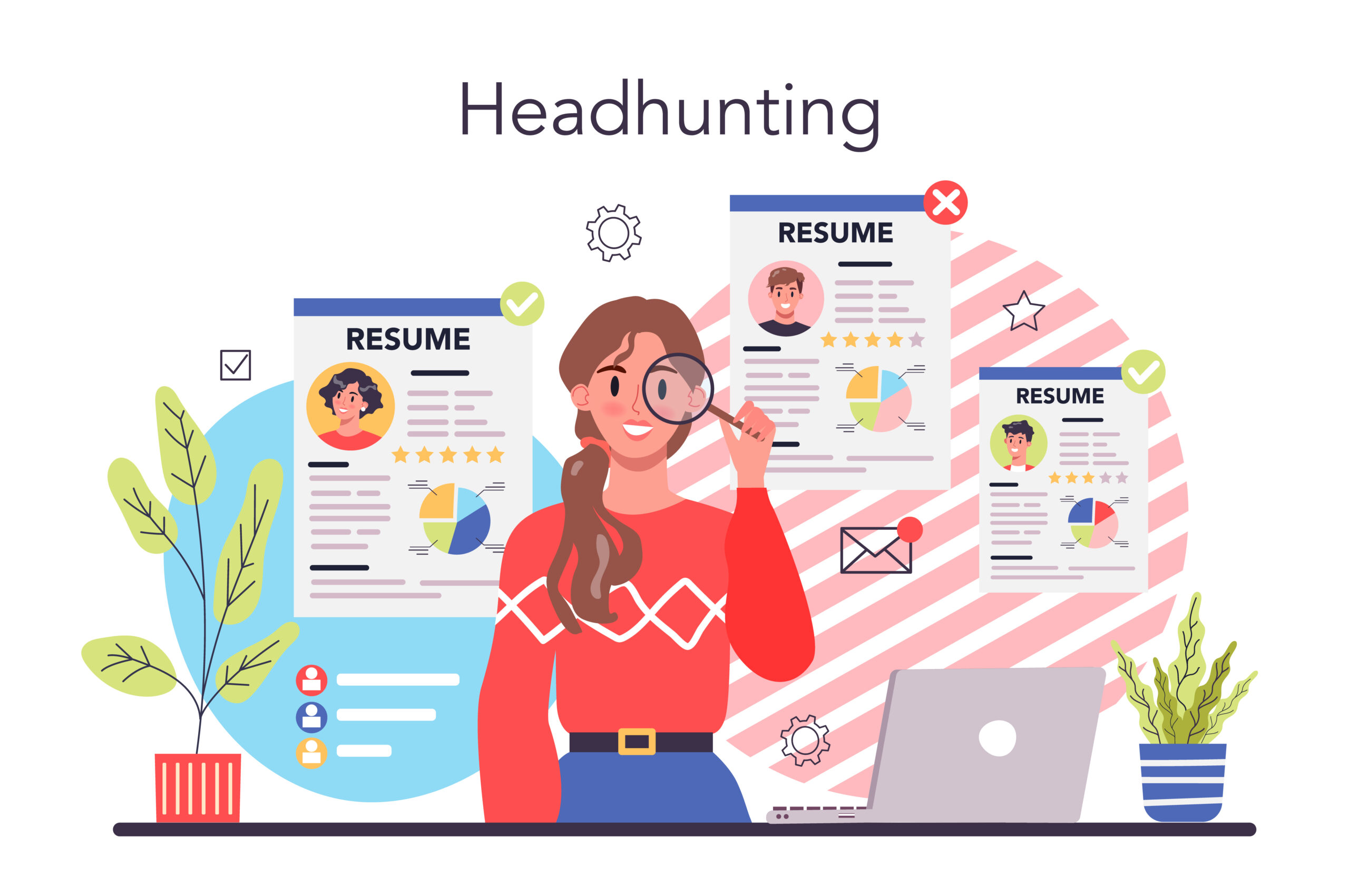
It is 9:47 AM. A recruiter at a mid-sized technology firm sits at her desk, staring at a screen that shows 1,247 unread job applications, all for a single senior software engineer role.
She knows the drill. Open a resume. Scan for keywords. Move to the next. Repeat.
For hours.
For days.
And somewhere in that mountain of PDFs and cover letters, the right candidate is waiting with patience, hopeful, completely unaware that a human being with tired eyes and a cold cup of coffee holds the key to their next opportunity.
This was the reality of recruiting for decades. It was slow, imperfect, and deeply human, in all the best and most frustrating ways.
Then, artificial intelligence walked through the door.
A World Measured in Days, Not Weeks
The numbers tell a story that is impossible to ignore.
The global average time-to-hire stood at 44 days in 2025. That is 44 days of uncertainty for candidates. 44 days of an unfilled seat for employers. 44 days of lost productivity, stalled projects, and mounting pressure on existing teams.
AI-powered recruitment workflows are collapsing that number to under 25 days, and in some high-volume environments, companies have reported drops from 27 days all the way down to 7 days. That is not an incremental improvement. That is a transformation.
According to research compiled across leading HR analytics platforms, AI-powered tools are reducing time-to-hire by an average of 50%, with some organizations reporting efficiency improvements of up to 70% when agentic AI workflows are fully deployed.
The Technology Behind the Speed
So what is actually happening inside these AI-driven systems? The answer lies in a stack of intelligent tools that work in concert, each one solving a problem that once consumed hours of human effort.
1. Intelligent Resume Parsing & Screening
Traditional applicant tracking systems (ATS) could filter resumes by keywords, but they were blunt instruments. Modern AI screening tools, platforms like Eightfold AI, Paradox, and HireVue, analyze resumes with up to 94% accuracy, evaluating not just job titles and degrees, but actual skills, career trajectories, and demonstrated competencies. Teams using AI screening report up to 40% faster time-to-shortlist for volume roles.
2. Conversational AI & Chatbots
Candidate response times once stretched to 7 days on average. With AI-powered chat and automated scheduling tools, that window has collapsed to under 24 hours. Paradox’s conversational AI assistant, Olivia, handles over 100 simultaneous candidate conversations and completes screening workflows in under 48 hours, a process that previously consumed 5 to 7 business days. Chatbots can now automate over 90% of end-to-end hiring tasks in high-volume roles.
3. Predictive Analytics & Skill Matching
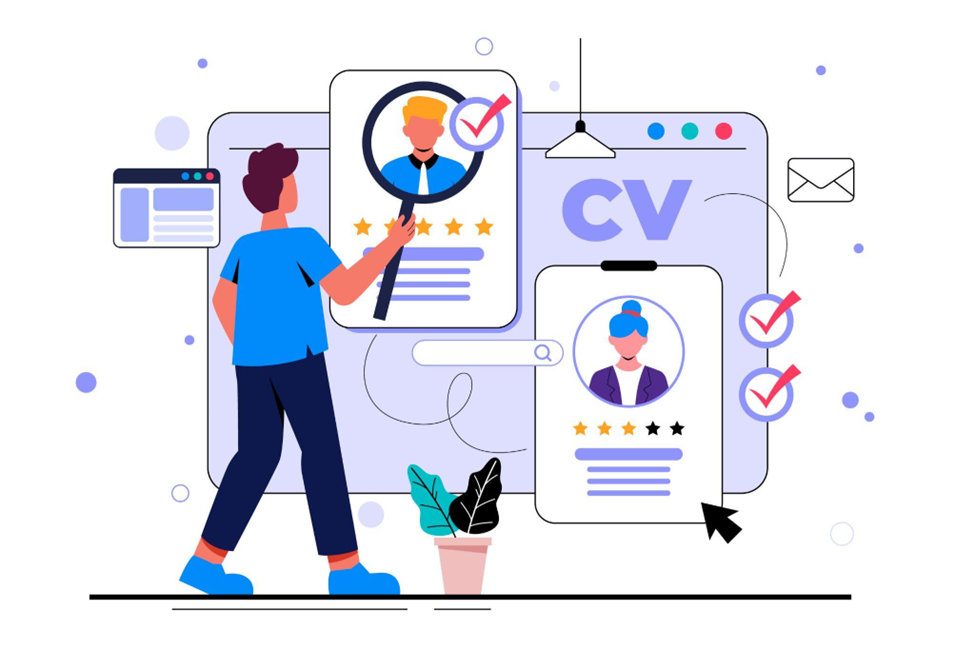
Perhaps the most powerful shift is the move from gut instinct to data-driven prediction. AI-based skill matching now predicts job performance with 78% accuracy and retention likelihood with 83% accuracy. Workday’s people analytics research reveals that predictive hiring models reduce bad hires by 75% and improve employee retention by 34%. For technology companies, where a single mis-hire can cost upward of 150% of an annual salary, these numbers represent millions saved.
4. Automated Interview Scheduling
Scheduling interviews is one of the most time-consuming yet least strategic tasks in recruiting. Research from SSR in 2026 found that 35% of a recruiter’s time is spent on interview coordination alone. AI scheduling tools eliminate this bottleneck entirely, syncing calendars, sending reminders, and confirming slots without a single email chain.
5. AI-Powered Video Interview Analysis
58% of organizations now rely on AI for video interview analysis, tools that evaluate communication patterns, language structure, and role alignment to surface the strongest candidates before a human interviewer ever enters the room. AI-driven interview analytics have been shown to boost hiring accuracy by 40%.
The Human Side of the Equation
Here is where the story becomes nuanced, and important.
AI does not replace recruiters. It liberates them. It powers them.
When algorithms handle the administrative weight of sourcing, screening, and scheduling, human recruiters are free to do what technology cannot: build relationships, understand aspirations, sense cultural fit, and make the kind of judgment calls that change the course of a career.
At Systemart, this is the philosophy that drives every engagement. Technology handles the speed. People handle the meaning. Both working for the same purpose.
There is also the matter of fairness. Properly implemented AI reduces hiring bias by 56 to 61% across gender, racial, and educational categories. Blind screening tools that remove demographic cues have been shown to cut gender bias by 54% and improve hiring rates for underrepresented groups by 35%. The result is not just a faster pipeline, it is a more equitable one.
The Business Case is Undeniable
For organizations still weighing the decision to adopt AI in their hiring process, the financial argument is compelling.
- AI recruitment reduces cost-per-hire by up to 30%
- AI sourcing has expanded candidate pools by an average of 340% while reducing sourcing time by 67%
- Companies report an average ROI of 340% within 18 months of proper AI recruitment implementation
- 93% of recruiters plan to increase AI usage in 2026
- By the end of 2026, 80% of enterprises are expected to use AI for significant portions of their hiring process
The AI recruitment market itself is valued at $596 million in 2025 and is projected to reach $861 million by 2030, a trajectory that signals this is not a trend. It is a permanent shift in how the world finds talent.
Back to That Monday Morning
The recruiter with 1,247 applications? In an AI-enabled world, her morning looks different.
The system has already parsed every resume, ranked candidates by role fit, flagged the top 30 for review, and sent automated outreach to the most promising profiles, all before she finished her first cup of coffee.
She does not spend the day buried in PDFs. She spends it on the phone with a candidate who just moved back to the city and is quietly looking for the right opportunity. She spends it understanding what “the right fit” actually means for her client. She spends it doing the irreplaceable work that only a human being can do.
That is the promise of AI in staffing: not a world with fewer people making decisions, but a world where people make better ones.
How Systemart Brings This to Life
At Systemart, the intersection of technology and talent is not a tagline, it is the foundation of every placement. By integrating AI-driven sourcing, intelligent screening, and predictive matching into a human-first recruitment model, Systemart helps organizations find the right people faster, smarter, and with greater confidence.
In a market where the global talent shortage has demand outpacing supply at a ratio of 3.2 to 1, speed is not just an advantage. It is a necessity.
The future of hiring is already here. The only question is whether your organization is ready to meet it.
Ready to transform your hiring process? Connect with Systemart to learn how AI-powered staffing solutions can help your team hire smarter, and faster.