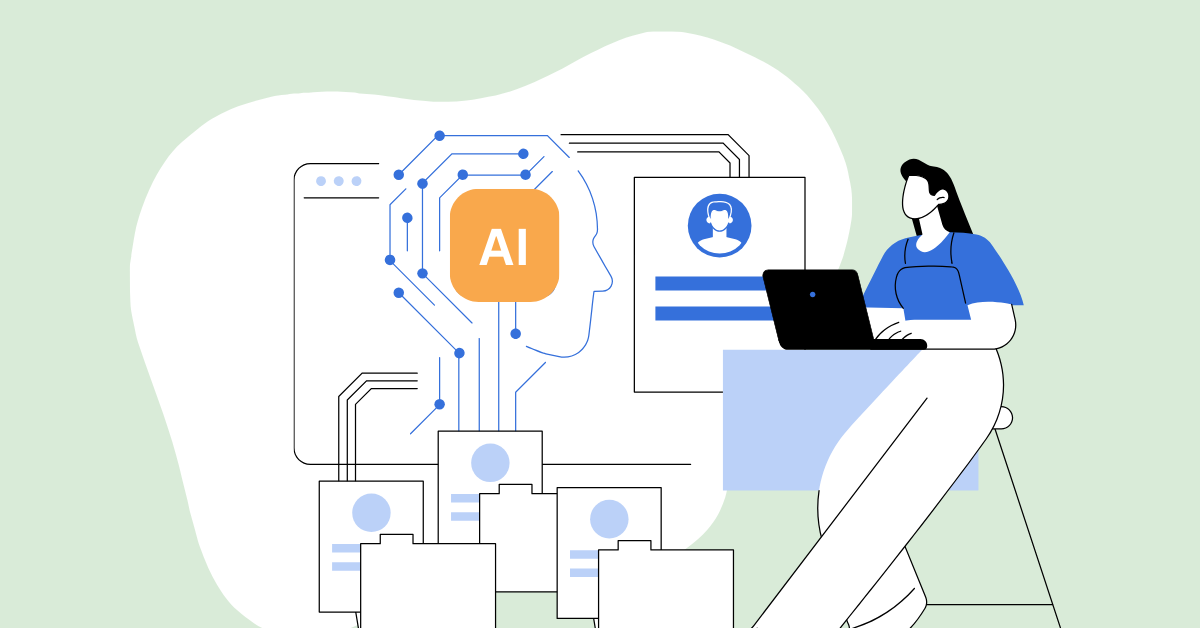
Technically speaking, an AI stands for Artificial Intelligence. It is a man-made program from a computer that is assigned tasks usually done by humans, such as data recognition, translation, and decision-making.
But, in an advanced logical manner, AI is used to solve a particular problem with the help of data gathering and setting up some countermeasures.
What is AI in Recruitment?
AI in recruitment first started as the fastest way to scan through a lot of CVs/resumes, which then allowed the program to pinpoint potential candidates exponentially, given the right keywords, requirements, and standards.
The way HR professionals attract, screen and onboard talent is changing dramatically, thanks to AI technology. Recent studies show that more than 67% of HR managers have already started using AI in their hiring processes, helping them quickly sift through hundreds of resumes.
By 2025, AI is expected to reduce hiring costs by almost 30% for businesses in various industries. In this digital world, where companies are struggling to get the best workers, AI offers speed, fairness, and accuracy—very important things in today’s hiring environment.
Using AI in the HR industry can create new possibilities and opportunities for both the recruiter and applicants in every hiring process.
Let’s look at why AI in Recruitment is not just a passing fad; it’s the key to a new era for HR Professionals.
Why Use AI in Recruitment Today?
Technology can be an advantage for enhancing the quality of applicants for any company.
It also opens the door to solving problems from traditionally hiring applicants, such as fraud, low self-esteem, no-show interviews, and other relevant cases that normally affect an HR recruiter’s time and effort.
The following are at least the ways in which AI in Recruitment will greatly transform the recruitment process:
A. Less Time Consumed
There has been a lot of time deducted in the recruitment process, such as compiling CVs/Resumes and other requirements.
A single recruiter cannot easily compile hundreds of applicant requirements in a given amount of time. At the same time, AI recruitment can easily sort out and even pinpoint the best candidate out of the hundred applicants.
B. Improved Resume Screening
AI in recruitment is revolutionizing resume screening, making it faster and more thorough.
Using AI-powered Applicant Tracking Systems (ATS), recruiters can define specific keywords and job requirements, enabling the system to quickly scan resumes for relevant qualifications, skills, and experience. This feature saves HR teams hours of manual work and ensures that only qualified candidates reach the interview stage.
AI-driven ATS can also recognize patterns in successful hires, helping recruiters focus on candidates who match the characteristics of past successful hires.
C. Removes Bias
The best thing about AI in recruitment today is that it eliminates bias caused by bargaining, sales talk, or even bribery that can occur during the initial application process.
Recruiters can use an AI recruitment process to ignore emotions and social interaction, which will gladly not respond to favor any applicants. The technology will only respond to gathering the correct data and quality requirements for the recruiter.
D. Personalized Candidate Engagement
AI’s ability to personalize candidate engagement has made a significant impact on candidate experience.
With tools like automated messages and AI-driven chatbots, an Applicant Tracking System (ATS) can keep candidates updated on their application progress, respond promptly to their questions, and even suggest personalized job openings based on their profiles.
This level of engagement enhances the candidate’s journey and strengthens the company’s reputation, making applicants feel appreciated and well-informed.
E. Data-Driven Decision Making
One of the important benefits of AI in recruitment is its ability to support data-driven decision-making.
AI-powered ATS systems can examine large amounts of hiring data to offer helpful information, like which job postings get the most applications or which sources bring in the highest-quality hires. This data assists HR teams in making smart changes to their recruitment plans, leading to better outcomes over time.
With tools like predictive analytics, AI can also predict future hiring needs using past data, helping companies be more proactive in their recruitment process.
F. Hiring Accuracy
AI runs for 24 hours and does not require energy to keep working.
A traditional way of hiring may run an entire day just to get the rest of the applicants under a smooth evaluation process. At the same time, AI recruitment may finish earlier without even spending a sweat out of a hundred applicants per second.
Recruiters can also assign AI processing to identify unique traits that potential candidates may have, such as performance in speaking, writing, and analyzing.
The process can be supported by data coming from present high-performance employees, and the system will act to match the same quality across all the applicants.
Conclusion on AI in Recruitment – A New Era for HR Professionals
Today, AI in Recruitment can even process facial expressions, language recognition, and candidate/job matching. This cannot be easily done by a traditional interview with a single application processing alone. An AI recruitment interview can systematically process numerous applicants at the same time with minimal chance of failure from getting the required fields and standards.
Related Articles:
How Artificial Intelligence is Reshaping the Staffing Industry?
How AI Improves Candidate Engagement during the Recruitment process?
Artificial Intelligence: A Boon Or A Curse?