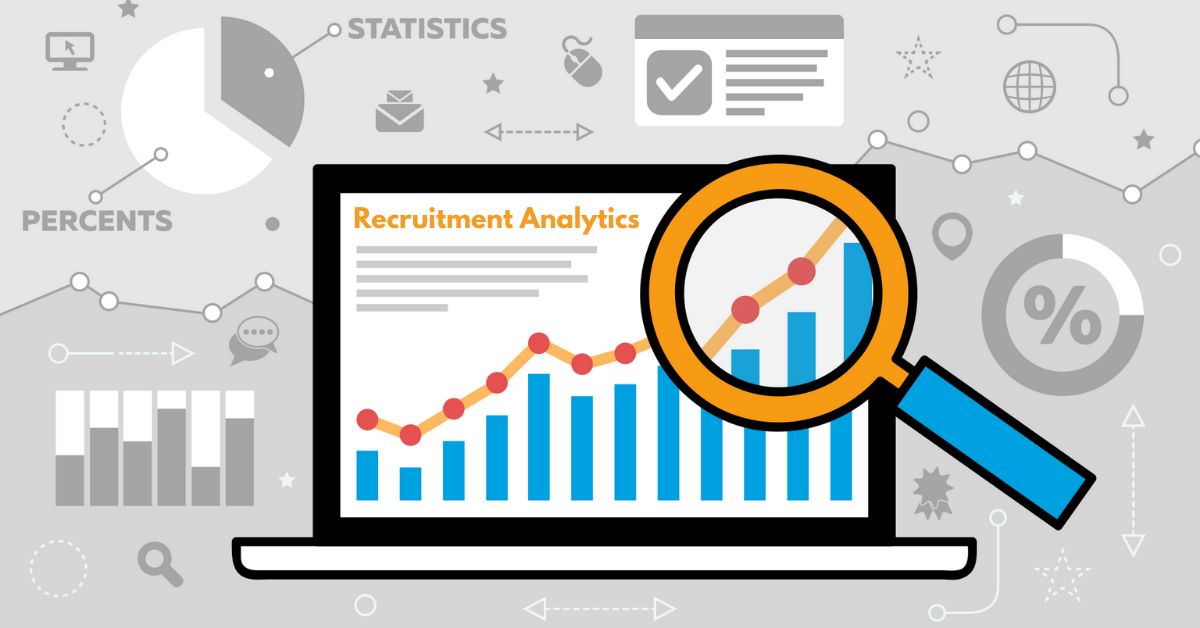
Recruitment is one of the most important processes that a company goes through regularly. All big companies hire new employees every year and go through the recruitment process. Recruitment involves everything from posting job openings and screenings to conducting interviews and offering the job. The recruitment process is long and drawn-out and requires a lot of resources and time. That is why it is important that the recruitment process be made as efficient as possible so as to minimize the resources spent on it. This is where recruitment analysis becomes important.
By Recruitment analytics, we mean collecting, studying, and interpreting data related to the hiring process in order to find meaningful patterns which will help speed up the recruitment process. The most basic function of recruitment analytics is to increase the efficiency of the hiring process. The Applicant Tracking System, Customer Relationship Management systems, Human Resources Information System data, satisfaction surveys, brand data, and data from the advertisement platforms used for job advertisement and branding provide the necessary data for recruitment analytics.
Levels of Recruitment Analytics:
When it comes to recruitment analytics and reporting, there are three basic levels.
Operational Reporting:
This is the first level of recruitment analytics and is in descriptive form. The data is gathered from the Applicant Tracking System and contains information about the cost of hiring, source of hiring, applications received per job opening, selection ratio, time taken to fill, time taken to hire, hiring manager satisfaction, and much more. These are the well-known and obvious core metrics information. The Applicant Tracking System makes the entire process simple.
If the Applicant Tracking system has been implemented in the company, then it needs only be connected to the dashboard. The company then needs to define the metric or the criteria for which they need information and the system will give it to them. No new data is made at this level and all of the data that is displayed is what was previously present in the system with few or no calculations done on it.
Advanced Reporting:
This is the second level of recruitment analytics with data gathered from multiple sources. There are still no advanced statistical calculations done at this level. At this level, factors such as candidate experience and financial recruitment metrics are either gathered from questionnaires or previous statistical data in the records.
Analytics:
Strategic and predictive analytics is the third stage of recruitment analytics, which includes segmentation, statistical analysis, development of people models and predictive models, and strategic and scenario planning. One example is programmatic advertising in which target candidates are first identified through the system for a specific job opening and then targeted through various online platforms.
Another example may be making the prediction about the time taken to hire a candidate for a job based on previous hiring processes and predicting the ideal candidate profile.
How is Recruitment Analytics used?
The first step in Recruitment analytics is gathering data related to the recruitment process and all previous recruitments done by other companies. Recruiting is a very long and complicated process and the HR department needs to make decisions every step of the way so that it can gather the data and then devise a plan to optimize the process.
By following the recruitment process at every step and noticing the number of applicants that applied for the job, the number of times they visited the website, how they engaged with the system, how they were accessed, and how were they hired, the software collects colossal amounts of data and then performs statistical operations on it to make it a meaningful data. It makes predictions accordingly and gives suggestions on how to optimize the process.
Benefits of Recruitment Analytics:
There are numerous benefits to using recruitment analytics. Some of them have been mentioned below:
1. It improves the quality and efficiency of the recruitment process.
2. It reduces the time taken to hire new employees.
3. With proper data collection and analysis, the company can achieve great things.
4. It can also help by predicting the right candidate who is the ideal candidate for the job.
5. It can also predict the future trends of the recruitment market.
Read More: Current use of AI Technology in Recruiting
What are the most important recruitment analytics?
There are many types of recruitment analytics, as the data is limitless so are the possibilities. But there are a few metrics that are more important than the others and so must be studied in a bit more detail than the others. These are as followed:
Quality of hire:
There are many metrics related to the quality of hire and there are a few things that one must consider while looking at the analytics for the quality of hire. The thing to remember is that nothing works in isolation and so the data must be kept relative to each other. For instance, if a new recruit is evaluated as a top performer, then you have to consider other things in relation to it as well. If the new hire performed well enough to become a top performer in a short time and then went on to continue working for the company, then the quality of hire is high. But if the same employee became a top performer within a short time but then ended up leaving the company soon after, then the quality of hire is pretty low.
Speed of hire:
Another important metric is the speed of hiring or the time taken to hire a new employee. Recruitment analytics help companies figure out how they can reduce the time spent on hiring new employees and minimize the resources sent on it.
Amount of costs:
Recruiting new employees is an expensive process and the company needs to calculate how much money is spent on it yearly. The recruitment analytics also predict the methodology to restrict the insane amount of money spent on hiring new people.

To conclude, Recruitment analytics refers to the collection and analysis of pre-existing data to predict ways to reduce the time and money spent on hiring new employees. There are stages of recruitment analysis, as well as types of recruitment analysis that help companies in the long run.